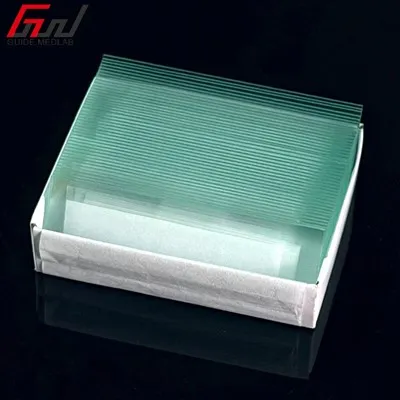
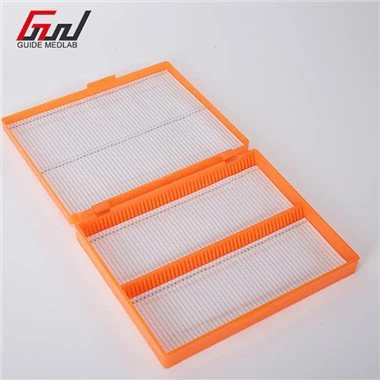
Lab Glass Cuvette
Lab glass cuvette are roughly divided into quartz cups, glass cups and plastic cups according to their materials. According to different measurement volumes, there are colorimetric cups and capillary colorimetric cups. Generally, the test of nucleic acid and UV quantitative protein adopts quartz cup or glass, but it is not suitable for colorimetric determination.
Description
Lab glass cuvette
Lab glass cuvette are roughly divided into quartz cups, glass cups and plastic cups according to their materials. According to different measurement volumes, there are colorimetric cups and capillary colorimetric cups. Generally, the test of nucleic acid and UV quantitative protein adopts quartz cup or glass, but it is not suitable for colorimetric determination.
Attention
When using the cuvette, the two light transmitting surfaces shall be completely parallel and placed vertically in the cuvette frame, so as to ensure that the incident light is perpendicular to the light transmitting surface during measurement, avoid the reflection loss of light and ensure the fixed optical path.
(1) When taking the cuvette, you can only touch the ground glass on both sides with your fingers to avoid contacting the optical surface.
(2) Do not contact the optical surface with hard objects or dirt. When containing the solution, the height is only 2 / 3 of the cuvette. If there is residual liquid on the optical surface, it can be gently adsorbed with filter paper, and then wiped with lens paper or silk.
(3) All solutions containing substances that corrode glass shall not be stored in the cuvette for a long time.
(4) Wash the cuvette with water immediately after use. If necessary, soak it in 1:1 hydrochloric acid, and then rinse it with water.
(5) Do not put the cuvette on a flame or electric furnace for heating or baking in a drying oven.
(6) If the cuvette is suspicious during measurement, it can be detected by itself. The user can select the wavelength seventy-seven.
Place a set of cuvettes on the wavelength actually used, inject distilled water into them, adjust the transmittance of one of them to 95% (set the digital display instrument to 100%), and measure the transmittance of the other ones. If the difference of transmittance is no more than 0.5%, it can be used together.
Washing method of Lab glass cuvette:
(1) The commonly used chromic acid washing solution should not be used to wash the cuvette, because the cuvette with water sometimes has local heating in the washing solution, resulting in the cracking of the bonding surface of the cuvette and damage. At the same time, the cuvette washed with washing solution is likely to remain trace chromium, which is absorbed in the ultraviolet region, so it will affect the determination of chromium and other related elements.
It is generally advocated to use a mixed solution of nitric acid and hydrogen peroxide (5:1) to soak and wash, and then rinse with water. For the cuvette that is difficult to clean by general methods, the following two methods can also be adopted.
(2) Soak the cuvette in sodium carbonate (20g / L) solution containing a small amount of anionic surfactant, wash it with water, and then soak it in the mixed solution of hydrogen peroxide and nitric acid (5:1) for half an hour.
(3) Soak in the fume hood with a mixed solution of hydrochloric acid, water and methanol (1:3:4).
Quality Control
Product quality is manufactured, not tested. The secret of production quality control is: let everyone do their own products. Employees are required to conduct self inspection on the products they produce. Only the products they think are qualified can flow to the next process or workshop. The unqualified products found in the self inspection should be identified and placed separately.
By the way,according to ISO standard, the production is strictly carried out. With inspection before shippment, such as appearance check, Puncture resistance test, leak proof test, flexibility test, sterilization etc., only high-quality and ISO passed sampling bags will be delivered to customers.
Packing, and Transportation
1.With middle box to package the Lab glass cuvette.
2.With plastic tape to seal the box.
3.With shipping marks on outer carton.
4.Shippment by:courier delivery,by air, by see, by train etc....
FAQ:
1.May we have a free sample?
Sample is Free, but the air freight is collect or you pay us the cost in advance.
2. May i have your catalogue?
Yes,please send us email.
3. About MOQ:
Our MOQ is 1 carton.
4. Are you a factory or a trader
We are a factory.
5.How many cuvettes do we have ?
Please contact us for more details.
Hot Tags: lab glass cuvette, China, suppliers, manufacturers, factory, custom, wholesale, price, pricelist, free sample